Hoiho Whakaora Tangata
  • Home
  • About
  • Groups and Team Building
  • Why Horses?
  • FAQs
  • Links/Articles
  • Contact
  • Face to face counselling
  • Blog
  • Product
  • Home
  • About
  • Groups and Team Building
  • Why Horses?
  • FAQs
  • Links/Articles
  • Contact
  • Face to face counselling
  • Blog
  • Product

Blog

Picture

5 Lessons People Can Learn From Horses in Equine Therapy

6/7/2018

 
Picture
1. Identifying and Coping with Feelings
Many people struggling with mental health issues have learned that feeling is painful. They may attempt in different ways, to numb sadness, anger, fear or even joy. For therapy to be successful, one of the first steps is learning to identify, experience and cope with emotions without trying to escape.
Equine therapy is a powerful way to get in touch with thoughts and feelings. Instead of using their minds to address problems, which often leads to denial, blaming others or intellectualizing their way around the problem, they use their bodies and hearts to feel and react in the moment.
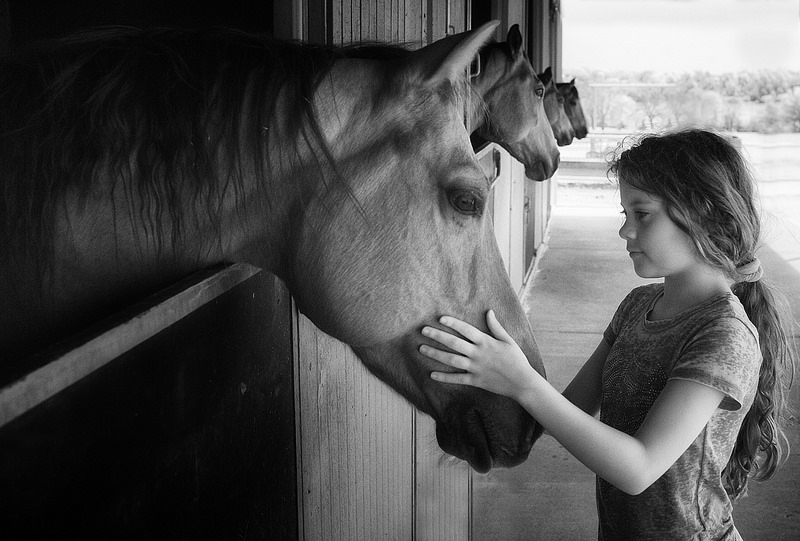
Horses have a unique ability to sense emotions and react accordingly. If someone is angry or aggressive, the horse may become obstinate. If the person is anxious, the horse may get skittish. But when approached by someone who is open and calm, the horse is more likely to respond in kind. Witnessing the horse’s response promotes self-awareness and can help people see themselves in a more realistic way.

2. Communication Skills
Through working with horses, people recognize their patterns of interacting with others. Horses do not speak, but they are excellent communicators. Learning to understand horse behaviour can help people learn how others function in the world and the way their behaviour impacts others.
 
In equine therapy, people talk about what they see and feel. Through the horse’s responses and the therapist’s guidance, they begin to recognize the ways in which their perceptions are accurate or misguided, and the ways they may be projecting their own issues onto others.

3. Setting Boundaries
Working with a horse can quickly expose a person’s unhelpful thought and behaviour patterns. In an equine therapy session, facilitators may draw metaphors between the client’s interaction with the horse and the patterns in their own lives, addressing difficult issues. Lessons may be as simple as how much physical space the horse needs to feel comfortable.
 
Without any words at all, horses make clear when someone has crossed their boundaries. Trying to control or dominate will not work with a horse. Similarly, being extremely detached or passive can make it difficult to lead a horse and will deter the horse from complying with a request.

4. Overcoming Fears
Horses are large animals, which can bring up unmet needs, fears, past trauma, and feelings of inadequacy or lack of control. Regardless of the horse, people commonly fear that the horse won’t like them, won’t pick them, or could hurt them physically or emotionally. Rather than giving in to their usual reaction – to escape or get defensive – people learn to tolerate and process the emotion.
 
In a safe environment, clients learn to face their fears and build confidence in their ability to overcome challenges. People who are intimidated and nervous at first may be surprised to discover how quickly they can process those feelings and find comfort in their relationship with the horse. Empowered by the experience, people may develop the confidence to address other fears and transfer these lessons to day-to-day life.
Clients don’t have to love horses or have experience working with animals in order to benefit from equine therapy.  They simply have to be willing to give treatment a chance and move in a different direction than they have in the past.

5. Trust
Horses are soothing, gentle animals. They are straightforward in their interactions without lying or manipulating. They do not judge or blame. Their presence alone can be immensely healing.

Comments are closed.

    Archives

    March 2021
    August 2020
    February 2020
    July 2019
    June 2019
    December 2018
    October 2018
    September 2018
    August 2018
    July 2018
    June 2018
    July 2016

    Categories

    All
    Equine Assisted Therapy

    RSS Feed

Proudly powered by Weebly
Photos from greg westfall., trentv11182, teresaphillips1965, Patrick Strandberg, Rennett Stowe, Rennett Stowe, greg westfall.